2026
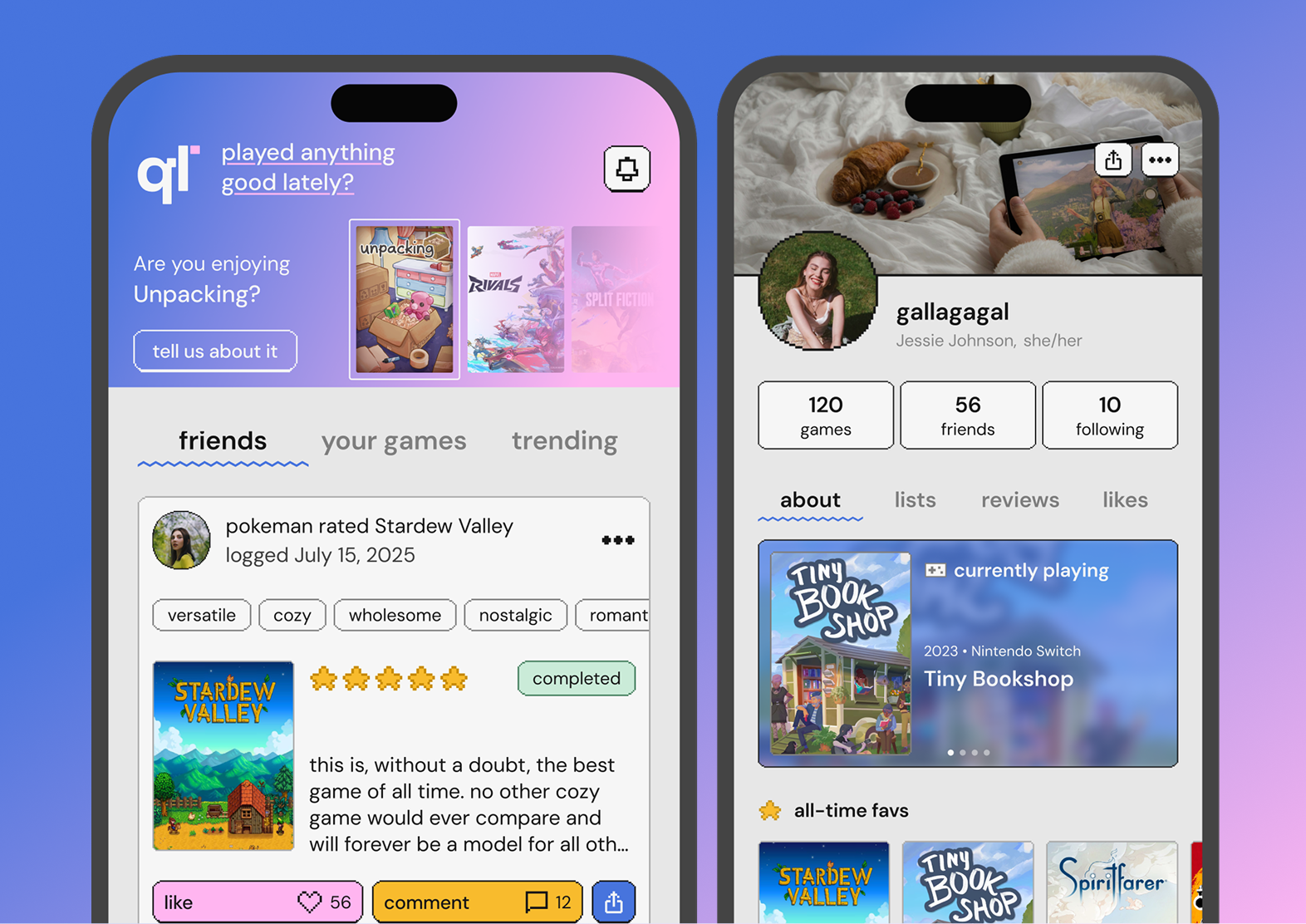
Questlist
Scalable, High-Performance Game Discovery & Reviews
Our Role
Consultation, Platform Architecture, and Development
The Stack
- Nuxt
- Vue
- GraphQL
- .NET
- PostgreSQL
- RabbitMQ
- Elasticsearch
Our Focus
- Domain-Driven Design
- Command Query Responsibility Segregation
- High-Throughput Catalog Search
Starting a video game discovery and review platform without tying it to an existing digital storefront comes with a unique scaling challenge. Infrastructure costs must remain low during early launch, but the architecture cannot compromise on future growth. The quickest wat to lose a newly acquired user base is performance degradation right as adoption spikes.
The goal was to build a responsive, high-throughput solution that operates within early budget constraints while growing alongside expanding user traffic, feature demands, and catalog growth.
Architectural Strategy
To keep the platform responsive and scalable in individual segments, we decoupled the application into distinct bounded contexts using Domain-Driven Design principles:
- Games Context: Developed a service that manages game metadata, developers, and publishers. Built for read-heavy access with slow, steady write cycles.
- Collections Context: Built a service that handles the creation, sorting, and curation of user game lists asynchronously, ensuring heavy user activity never blocks core catalog operations.
- Feed Context: Designed to generate dynamic home feeds using tailored read models, completely eliminating expensive live joins across subsystems.
- Unified GraphQL Edge Layer: Placed a unified GraphQL layer over the underlying bounded contexts, allowing the Nuxt frontend to query stitched data across Games, Collections, and Feeds in a single, tailored request without over-fetching.
Engineering Highlights
- Containerized Service Isolation: Encapsulated each bounded context and backing service (RabbitMQ, ElasticSearch, PostgreSQL) into isolated containers, allowing resource-heavy components like search indexing to scale independently while keeping baseline infrastructure costs low.
- Sub-50ms Search: Implemented an event-driven CQRS pipeline using RabbitMQ and ElasticSearch to sync catalog mutations into a dedicated search index, maintaining sub-50ms query responses.
Outcomes & Technical Impact
- Ultra-Low Latency: Achieved sub-50ms average search latency for game queries across 300,000+ titles.
- Resilient Ingestion Pipeline: Built an automated ingestion worker capable of processing 20,000+ games per year without disrupting user traffic.